


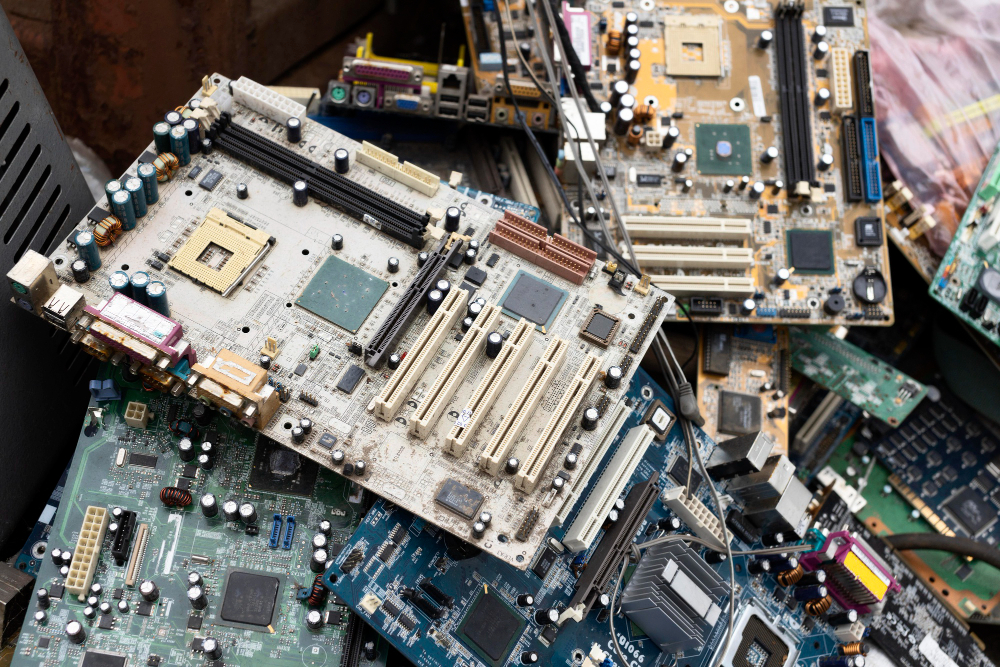
It’s easy to look at a closet full of old laptops, servers, and dusty printers and see them as just a pile of electronics to throw away. But treating all electronic waste the same can be a costly mistake. IT scrap recycling and standard e-waste recycling in Dubai actually serve very different functions, and when sensitive corporate data is sitting on those hard drives, picking the right process is the difference between simple disposal and a major security risk.
In cases where firms require electronic waste disposal Dubai, there is a provider of comprehensive e-waste disposal and IT asset management services known as Planet Green.
Clear definition of these varied methods is the first requirement for devising a hardware decommissioning process.
What Is IT Scrap Recycling, and When Do Businesses Need It?
IT scrap recycling specializes in the lifecycle management and component recovery of decommissioned enterprise hardware. The scope of coverage extends to enterprise servers, storage arrays, network switches, workstation fleets, storage drives, and peripheral imaging hardware.
Take a company upgrading hundreds of office desktops: those old computers might be useless for daily operations, but they’re still packed with valuable metals, working components, and parts that can be salvaged and reused.
Here’s the catch when you recycle old IT equipment dubai: the data hiding on those drives. Handing old laptops or servers over to a basic scrap recycler without proper wipe procedures opens your business up to serious data leaks.
A professional IT recycling workflow includes the following steps:
- Asset Collection & Inventory: Logging and tracking all retired equipment.
- Inspection & Categorization: Sorting assets by condition and recovery value.
- Data Sanitization: Executing secure data wiping or physical drive destruction.
- Component Salvage: Extracting reusable parts and materials.
- Material Recycling: Processing remaining scrap through eco-friendly streams.
- Audit & Certification: Issuing official certificates of destruction and recycling.
Planet Green’s IT Asset Disposition (ITAD) framework provides end-to-end chain of custody management, synthesizing asset intake and diagnostics, NIST-compliant media destruction, sustainable material recovery, and verified regulatory certification.
Once you’ve got a handle on securing sensitive IT data, it’s much easier to see how general e-waste fits into the bigger sustainability picture.
What Is E-Waste Recycling?
Electronic waste (e-waste) recycling represents the macro-level process of reclamation, disassembly, and secondary raw material extraction across post-consumer electrical equipment. Scope extends across enterprise IT infrastructure, commercial appliances, and general electronic devices.
Commercial facilities routinely generate e-waste across several key equipment categories:
- Core Computing: Laptops, desktop PCs, and server infrastructure
- Mobile Devices: Enterprise smartphones and tablets
- Peripherals & Displays: Office printers, copiers, and monitors
- AV & Facilities Equipment: Conference room displays, projectors, and secondary electronics
In a proper e-waste facility, the first step is separating gear that can be salvaged from items that need to be broken down. From there, materials like precious metals, plastics, glass, and circuit boards are sorted out so they can be processed and reused in new manufacturing.
Although IT resources are part of e-waste, they are in a different class of their own. IT equipment management requires that there be rigorous data protection, data erasure according to NIST standards, and asset tracking before the recovery of materials.
Evaluating equipment through this dual framework ensures that risk mitigation and sustainability goals are aligned, guiding enterprise assets toward their optimal, compliant disposition pathway.
IT Scrap Recycling vs. E-Waste Recycling: What Is the Key Difference?
Ultimately, the primary differentiator rests on the asset profile undergoing disposition and its associated data risk classification.
| Factor | IT Scrap Recycling | E-Waste Recycling |
| Primary focus | Retired IT equipment | Wider range of electronic waste |
| Examples | Servers, laptops, computers, hard drives | IT equipment, phones, Tvs, appliances, and electronics |
| Main concern | Data security + material recovery | Environmental handling + material recovery |
| Asset Tracking | Often highly important | Depends on the waste stream |
| Data destruction | Frequently required | Required when data-bearing devices are involved |
| Final processing | Reuse, refurbishment, dismantling, and recycling | Sorting, dismantling, and material recovery |
From a corporate governance perspective, disposal protocols must be calibrated to the risk profile of individual assets. Equipment housing proprietary data or regulated customer records mandates strict data sanitization controls, whereas non-data-bearing electronic accessories can be routed directly through standard commodity recycling channels.
This makes proper classification essential before collection begins.
Why Does Secure Disposal Matter for Businesses?
Rigorous disposition protocols eliminate the regulatory and liabilities inherent in residual storage media. Standard file deletion and basic partition formatting fall short of statutory compliance thresholds; total risk mitigation requires NIST-compliant software erasure, degaussing, or physical media shredding.
Whether it’s HDDs, SSDs, thumb drives, or old tape backups, retired storage devices are packed with private business, employee, and client details. Planet Green takes the risk off your plate using certified wiping software and physical drive destruction, providing full paper-trail documentation for every single device.
For organizations seeking secure disposal of IT equipment in Dubai, an optimal ITAD framework must follow a strict, multi-stage workflow:
- Controlled Collection: Secure transport and chain-of-custody pickup.
- Asset Identification: Detailed serial-number recording and asset inventory.
- Data Disposal: Officially certified data-wiping program or physical destruction of media.
- Material Recycling: Recycling micro components and sub-assemblies.
- Environmentally Responsible Recycling: Environmentally compliant material recycling.
- Certification & Records: Official Certificates of Destruction for audit compliance.
This end-to-end structure maintains a fully traceable link from asset retirement to final disposition.
Having established absolute data security controls, leadership can pivot to optimizing the environmental performance of the hardware lifecycle, driving measurable progress toward corporate ESG and circular economy goals.
When Should Businesses Choose E Waste Recycling in Dubai?
The best way forward in this case will be broad e-waste recycling because you will have different kinds of electronic waste taking up too much space, and the need is for environmentally friendly disposal.
Over time, mixed technologies collect very quickly, whether it is when changing offices or disposing of a large amount of technology or even from an unused storeroom. This is made easier through cooperation with an efficient e-waste recycling firm in Dubai, whereby the process of sorting out the technology, determining which of them can be repaired, data removal, and recycling will be done effectively.
Planet Green provides solutions for all office technologies, such as servers, desktops, and laptops; network switches; monitors; tablets; cell phones; projectors; and photocopiers.
In the end, choosing the best solution depends on three factors, which include the type of technology being disposed of, whether it has any sensitive information, and finally, the paper-trail requirement.
Frequently Asked Questions
- Is IT scrap recycling the same as e-waste recycling?
No. IT scrap recycling specifically targets enterprise hardware like servers and PCs, whereas e-waste recycling covers a broader spectrum of electrical items. IT assets also require strict, certified data security controls.
- Can businesses recycle old computers and servers?
Yes. Used Computers and servers can be sold, used for Parts Removal, or recycled as Raw Materials, depending on the Condition of the hardware and Security Issues.
- How should businesses handle hard drives before recycling?
Hard drives must undergo certified, professional data sanitization or physical destruction prior to material recycling. Planet Green provides certified media destruction with full audit documentation.
- Does Planet Green provide electronic waste disposal in Dubai?
Yes. Our company, Planet Green, ensures complete e-waste management services in Dubai through pick-up, asset segregation, data destruction, environmentally friendly recycling, and reporting.
- Why choose Planet Green for business e-waste management?
Planet Green combines safe IT asset disposal with sustainable recycling and chain-of-custody tracking that enables businesses to handle their technology assets in a highly secure way.