


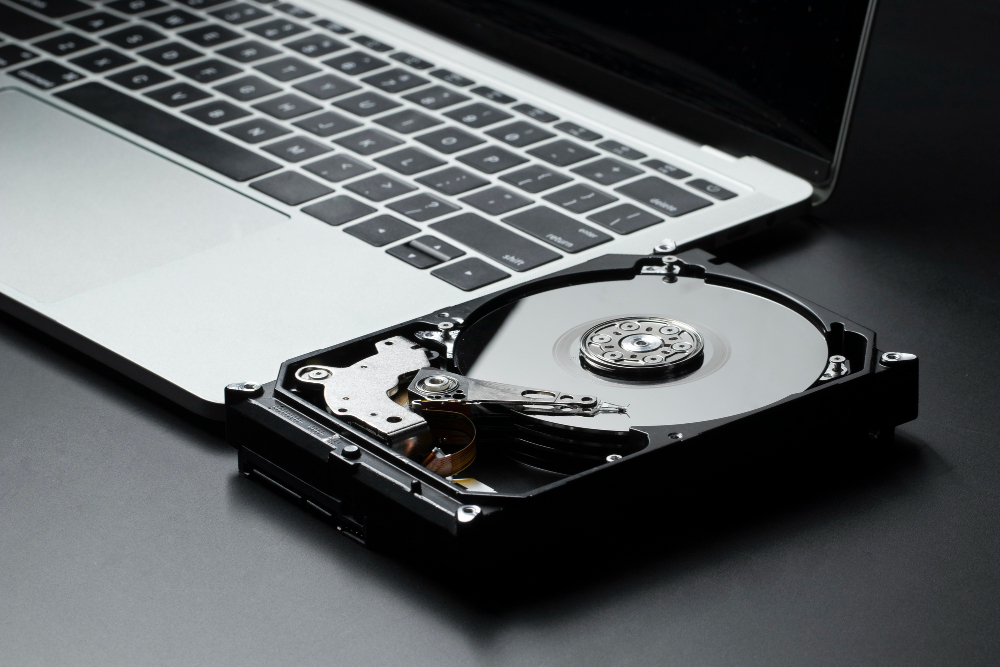
Data breaches from improperly disposed IT equipment continue to rank among the costliest compliance failures for businesses today. A single unwiped hard drive or discarded server can undo years of security investment and put a company’s ISO certification at risk. This is why secure data destruction for ISO compliance has become a non-negotiable part of information security management, not an afterthought handled at the end of an IT refresh. For businesses in Dubai and across the UAE, aligning data disposal with recognized standards is now central to passing audits, protecting client trust, and avoiding regulatory penalties. This blog looks at why secure destruction matters, what auditors expect, and how the right process keeps your business audit-ready year after year.
Why Secure Data Destruction Matters for Compliance
Simply deleting files or wiping a drive with basic software does not guarantee that data is gone. Recoverable fragments can sit on storage media long after a “delete” command, exposing customer records, financial data, and internal communications to anyone who gets hold of the device later. Regulatory frameworks and ISO standards treat this as a genuine security gap. Whether your business handles healthcare records, financial transactions, or general customer data, the underlying expectation is the same: data must be rendered permanently unrecoverable before any device leaves your custody.
This is where secure destruction becomes a compliance tool rather than just a housekeeping task. It closes the final gap in the data lifecycle, the point where most businesses unknowingly create exposure.
ISO Compliant Data Destruction: What the Standard Expects
ISO 27001, the internationally recognized standard for information security management, requires organizations to control how data-bearing media is disposed of or reused. In practice, this means storage devices such as hard drives, SSDs, tapes, and mobile devices must go through a documented, verifiable destruction or sanitization process before disposal.
ISO compliant data destruction typically involves three elements. First, a formal disposal procedure that matches the sensitivity of the data involved, physical destruction for highly sensitive information and verified erasure for lower-risk devices. Second, a documented chain of custody that tracks each item from collection to final destruction. Third, a certificate confirming the outcome, including the method used, the date, and identifying details of the equipment destroyed. Without these three elements, a business cannot demonstrate to a certification body that its disposal practices actually meet the standard, even if the data was technically destroyed.
Data Destruction Audit Requirements Businesses Must Prepare For
When auditors assess an organization’s information security controls, they are not just checking whether destruction happened. They are looking for evidence that it happened correctly, consistently, and that the process can be reproduced on demand. Common data destruction audit requirements include a written destruction and retention policy, logs showing when and how each device was processed, and serial-level certificates that tie specific hardware to specific destruction events.
Auditors also expect businesses to review their disposal practices periodically rather than treating them as a one-time policy. Vendor contracts should specify destruction methods and require proof of compliance from any third party involved. This documentation trail is what allows a business to respond quickly and confidently when a certification body, client, or regulator asks for evidence, rather than scrambling to reconstruct records after the fact.
Where the Data Center Decommissioning Process Fits In
For businesses retiring servers, migrating to the cloud, or shutting down infrastructure, the data center decommissioning process is where compliance risk is highest. A single decommissioning project can involve dozens or hundreds of storage devices, and each one needs to be accounted for individually.
A properly structured decommissioning process begins with a full inventory audit of servers, storage drives, and networking equipment. This is followed by certified destruction of all data-bearing media, secure dismantling and tagging of hardware, and environmentally responsible recycling of components that no longer hold data. Every stage should be documented, ending with a compliance report and certificates of destruction that map back to specific asset IDs. Skipping any of these steps, especially during a rushed office move or facility closure, is one of the most common ways businesses unintentionally fall out of compliance.
Building a Repeatable, Audit-Ready Process
The businesses that pass audits smoothly are the ones that treat data destruction as an ongoing operational practice rather than a reaction to an upcoming certification review. That means classifying data by sensitivity, defining clear retention and destruction timelines, and working only with destruction partners who can provide serial-level documentation. It also means keeping records centralized and accessible, since the speed at which a business can produce evidence during an audit reflects directly on its operational maturity.
Partner With Planet Green for Secure, Certified Data Destruction
This is exactly where Planet Green Recycling adds value for businesses across Dubai and the UAE. As an R2v3, ISO 27001:2022 and ISO 9001:2015 certified recycling company, Planet Green offers secure data and media destruction along with full data center decommissioning services, covering hard drives, SSDs, servers, tapes, and mobile devices.
Every job follows a verified chain of custody, with items logged and tracked from secure collection through certified destruction. Clients receive a Certificate of Destruction for complete audit trail evidence, backed by eco-friendly recycling of all processed materials. Businesses across finance, healthcare, and government sectors already rely on Planet Green to keep their disposal practices compliant and their audits stress-free. Get in touch with Planet Green Recycling today to schedule a secure data destruction assessment for your business.
FAQs
1. What is secure data destruction for ISO compliance?
It is the certified, documented process of permanently destroying data on storage devices to meet ISO 27001 requirements, ensuring information cannot be recovered after disposal or reuse.
2. What documents satisfy data destruction audit requirements?
Auditors typically expect a written destruction policy, chain-of-custody logs, and serial-level Certificates of Destruction confirming the method, date, and equipment processed.
3. Is ISO compliant data destruction only for large enterprises?
No. Any business handling sensitive data, regardless of size, needs documented destruction practices to protect client information and pass regulatory or client audits.
4. How does the data center decommissioning process support compliance?
It combines asset inventory, certified data destruction, secure dismantling, and documentation, ensuring no storage device is overlooked during infrastructure retirement or migration.
5. Why choose Planet Green for secure data destruction in Dubai?
Planet Green Recycling is an R2v3, ISO 27001:2022 and ISO 9001:2015 certified recycling entity that offers full chain-of-custody tracking and issues Certificates of Destruction, giving businesses audit-ready proof of compliant, secure disposal.