


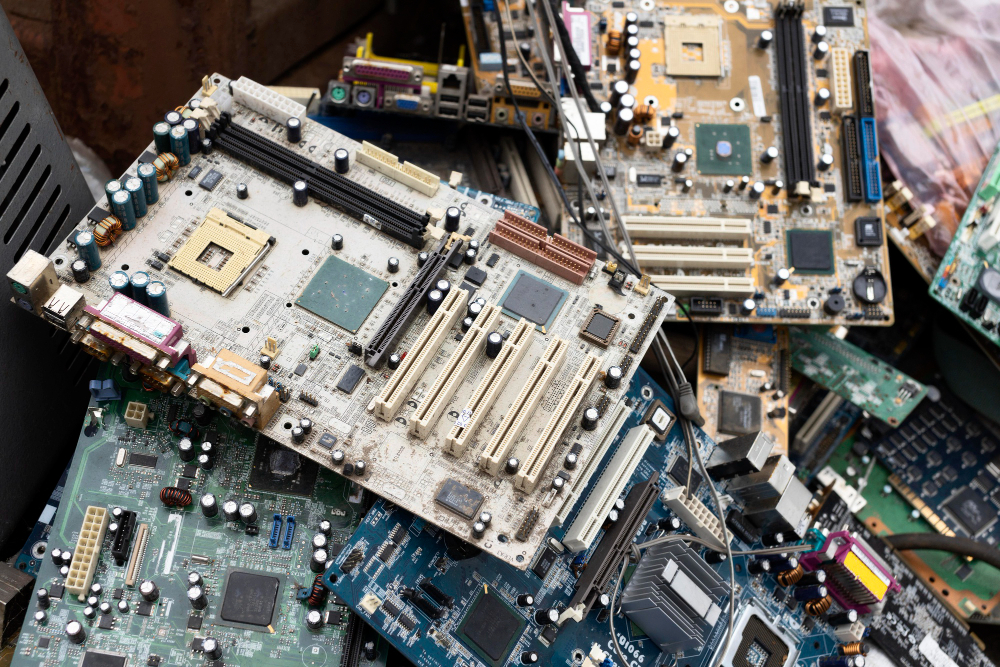
Old laptops, servers, and hard drives do not disappear once an office retires them. Each device enters a documented chain of custody that decides whether it gets a second life or turns into a hazard, both for the environment and for whatever data still sits on its drive. That is why businesses across the UAE increasingly rely on a professional IT asset disposal service instead of handling old electronics themselves or letting them pile up in a storeroom. The UN’s Global E-waste Monitor 2024 recorded 62 million tonnes of e-waste worldwide in 2022, and only 22.3% of that volume was formally collected and recycled. Most of the rest ended up in landfills or informal scrapyards with no record of where it went. This article breaks down what happens after IT equipment leaves an office, step by step, until it reaches its final destination.
Scheduled Collection and Secure Transport
The process starts with a site visit. A recycling partner collects computers, servers, monitors, printers, and networking equipment from the client’s premises. Every item gets logged against a manifest before it leaves the building, creating a paper trail that protects the client if a device is questioned later. This documentation step anchors the entire IT asset disposal process flow, since a missing record can become a compliance problem later.
Which IT Items Qualify for Professional Recycling
Not every discarded item needs identical handling, but most retired office IT equipment falls under a recognized recycling category, including:
- Desktops, laptops and tablets
- Servers, networking hardware and telecom equipment
- Monitors, printers and scanners
- Hard disk drives, USB drives, CDs and DVDs
- Battery-operated electronics and monitoring or control instruments
- Obsolete or unsold inventory that never left its packaging
Grouping equipment this way speeds sorting at the facility and keeps battery-containing items separate from general electronics.
Sorting and Categorization at the Facility
Once equipment reaches the facility, technicians separate it into groups: fit for reuse, needing repair, or headed for dismantling. Sorting by material and condition decides how much gets a second life instead of being broken down for parts.
Data Destruction
Before any hardware moves further, the company isolates storage media. Hard disk drives, solid-state drives, USB drives, CDs, DVDs, and magnetic tapes carry information that cannot leak. IBM’s 2024 report put the global average cost of a data breach at $4.88 million, which explains why data security outweighs every other concern here. Destruction can happen onsite, where a company representative watches the process, or offsite at the facility, using shredding, degaussing, or certified wiping depending on the media type and security needs. Many recyclers align their wiping procedures with NIST Special Publication 800-88, the widely referenced US data sanitization standard, because it provides a documented method for proving data cannot be recovered.
Dismantling and Component Recovery
If equipment is non-reusable, it proceeds to manual disassembly. Rather than crushing the units immediately, skilled technicians carefully extract valuable parts such as processors, memory modules, power supplies, and display screens. The remaining materials are then sorted into distinct streams of glass, plastic, metal, and circuit boards for tailored processing.
Material Recovery and Recycling
Segregated materials move to specialized processing centers. Metals such as aluminum, steel, and copper get melted down and reintroduced into manufacturing. Plastics are cleaned and reprocessed into raw pellets. Circuit boards go through extraction to recover trace amounts of gold, silver, and copper. This stage connects recycling IT assets in Dubai to a wider global supply chain, since recovered material often feeds into new electronics manufacturing.
Certification and Reporting
Documentation completes the process. Organizations receive a formal recycling or destruction certificate verifying the items processed. This documentation provides tangible proof for Corporate Social Responsibility (CSR) reporting and helps prove adherence to UAE Federal Law No. 12 of 2018 regarding Integrated Waste Management.
Why Sustainable IT Asset Disposal Matters for Your Business
An academic study on e-waste behavior in the UAE found the average resident generates around 17.2 kg of electronic waste yearly, one of the higher rates in the Middle East. Globally, the raw materials in e-waste generated in 2022 were valued at roughly $91 billion. Yet, the same UN report found that only about $19 billion of that value was recovered through documented recycling. Against that backdrop, choosing sustainable IT asset disposal protects a company from data exposure, keeps hazardous materials out of landfills, and creates an audit trail for audits or client reviews.
Ready to Retire Your Old IT Equipment the Right Way?
Planet Green Recycling manages the full disposal chain for businesses across Dubai, from pickup at the office door to a final certificate that closes the loop. The facility holds ISO 9001:2015 certification and operates with approval from the Dubai Economic Department and Dubai Municipality, giving companies a documented, compliant path for retiring old computers, servers, and storage media. Instead of leaving outdated hardware exposed in a storeroom or risking the wrong buyer, businesses can hand it over to a facility built specifically for collection, data destruction, and material recovery. Contact Planet Green Recycling to schedule a collection and get retired IT assets processed responsibly.
Frequently Asked Questions
How long does the IT asset disposal process usually take?
Depending on the total volume, most collections and processing are completed within a one- to two-week timeframe.
Is data destruction guaranteed to be irreversible?
Certified shredding, degaussing, and wiping methods make data permanently unrecoverable when trained technicians perform them.
Can old IT equipment still be reused instead of recycled?
Absolutely, operational devices can frequently undergo refurbishment, re-testing, and resale to maximize their lifecycle.
What documentation should businesses request after disposal?
Companies should obtain an itemized manifest detailing all picked-up items, accompanied by an official certificate of recycling or destruction.
Does IT recycling help with CSR reporting?
Yes, recycling certificates give companies verifiable evidence to support annual environmental and CSR reporting requirements.